Tungsten Radiation Shield Glossary(S-X)
Radiation Terms and Definitions
This page provides a list of general terms that are used to describe aspects of radiation science. Click on the desired term from the list to retrieve the definition for the term.Scattered radiation
Radiation that, during its passage through a substance, has been changed in direction. It may also have been modified by a decrease in energy. It is one form of secondary radiation.
Scintillation detector
The combination of phosphor, photomultiplier tube, and associated electronic circuits for counting light emissions produced in the phosphor by ionizing radiation.
Sealed source
Any special nuclear material or byproduct encased in a capsule designed to prevent leakage or escape of the material.
Shielding
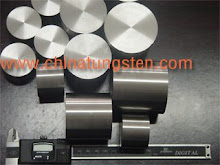
Any material or obstruction that absorbs radiation and thus tends to protect personnel or materials from the effects of ionizing radiation.
Sievert (Sv)
The international system (SI) unit for dose equivalent equal to 1 Joule/kilogram. The sievert has replaced the rem. One sievert is equivalent to 100 rem.
Somatic effects of radiation
Effects of radiation limited to the exposed individual, as distinguished from genetic effects which may affect subsequent unexposed generations.
Source material
Uranium or thorium, or any combination thereof, in any physical or chemical form or ores which contain by weight one-twentieth of one percent (0.05%) or more of (1) uranium, (2) thorium, or (3) any combination thereof. Source material does not include special nuclear material.
Source term
The types, quantities, and chemical forms of the radionuclides that encompass the source of potential for exposure to radioactivity.
Special nuclear material
Includes plutonium, uranium-233, or uranium enriched in the isotopes uranium-233 or uranium-235.
Stable isotope
isotope that does not undergo radioactive decay.
Stochastic effects
Effects that occur by chance and which may occur without a threshold level of dose, whose probability is proportional to the dose and whose severity is independent of the dose. In the context of radiation protection, the main stochastic effect is cancer.
Survey meter
Any portable radiation detection instrument especially adapted for inspecting an area or individual to establish the existence and amount of radioactive material present.
Terrestrial radiation
The portion of the natural background radiation that is emitted by naturally occurring radioactive materials, such as uranium, thorium, and radon in the earth.
Thermoluminescent dosimeter
A small device used to measure the radiation dose by measuring the amount of light emitted from a crystal in the detector when the crystal is heated after being exposed to the radiation.
Tritium
A radioactive isotope of hydrogen. Tritium contains one proton and two neutrons in its nucleus. Because it is chemically identical to the natural hydrogen atoms present in water, tritium can easily be taken into the body by ingestion. It decays by beta emission and has a radioactive half-life of about 12.5 years.
Ultraviolet
Electromagnetic radiation with a wavelength ranging from violet within the visible spectrum to low-energy x rays.
Unstable isotope
A radioactive isotope.
Uranium
A radioactive element with the atomic number 92 and, as found in natural ores, an atomic weight of approximately 238. The two principal natural isotopes are uranium-235 (0.7 percent of natural uranium), which is fissile, and uranium-238 (99.3 percent of natural uranium), which is fissionable by fast neutrons. Natural uranium also includes a minute amount of uranium-234.
Uranium fuel fabrication facility
A facility that (1) manufactures reactor fuel containing uranium for any of the following (i) preparation of fuel materials, (ii) formation of fuel materials into desired shapes, (iii) application of protective cladding, (iv) recovery of scrap material, and (v) storage associated with such operations, or (2) conducts research and development activities.
Uranium hexafluoride production facility
A facility that receives natural uranium in the form of ore concentrate; enriches it, either by gaseous diffusion or gas centrifuge methods; and converts it into uranium hexafluoride (UF6).
Waste, radioactive
Solid, liquid, and gaseous materials from nuclear operations that are radioactive or become radioactive and for which there is no further use. Wastes are generally classified as high-level (having radioactivity concentrations of hundreds of thousands of curies per gallon or foot), low-level (in the range of 1 microcurie per gallon or foot), or intermediate level (between these extremes).
Weighting factor (WT)
A multiplier that is used for converting the equivalent dose to a specific organ or tissue into what is called the “effective dose.” The goal of this process was to develop a method for expressing the dose to a portion of the body in terms of an equivalent dose to the whole body that would carry with it an equivalent risk in terms of the associated fatal cancer probability. It applies only to the stochastic effects of radiation.
Well-logging
A technique used in oil and gas exploration to help predict the commercial viability of new or existing wells. It involves lowering a well-logging tool, including a sealed source of radioactive material, into a well on a wire. This device sends data on the well's underground characteristics to the surface where it is plotted on a chart.
Whole-body counter
A device used to identify and measure the radioactive material in the body of human beings and animals. It typically uses heavy shielding to keep out background radiation from the ultra-sensitive radiation detectors and electronic counting equipment.
Whole-body exposure
An exposure of the body to radiation, in which the entire body, rather than an isolated part, is irradiated. Where a radioisotope is uniformly distributed throughout the body tissues, rather than being concentrated in certain parts, the irradiation can be considered as whole-body exposure.
Wipe sample
A sample made for the purpose of determining the presence of removable radioactive contamination on a surface. It is done by wiping, with slight pressure, a piece of soft filter paper over a representative type of surface area. It is also known as a "swipe or smear" sample.
X rays
Penetrating electromagnetic radiation having a range of wavelengths (energies) that are similar to those of gamma photons. X rays are usually produced by excitation of the electron field around certain nuclei. Although once formed, there is no difference in x rays and gamma photons; however, there is a difference in their origin. X rays are produced by shifts in the electrons between the rings outside the nucleus of an atom whereas gamma photons are produced by reactions within the nucleus of an atom.


No comments:
Post a Comment